Young Linguists Earn Internationally Recognised French Language Certifications
Raipur: In a proud achievement for N.H. Goel World School, students from Grades 7 to 12 successfully cleared different levels of the DELF—Diplôme d’Études en Langue Française—examinations.
Their success reflects their dedication, consistent practice, and growing command of the French language. It also highlights the guidance and committed support provided by the school’s French language faculty.
Celebrating Our DELF Achievers
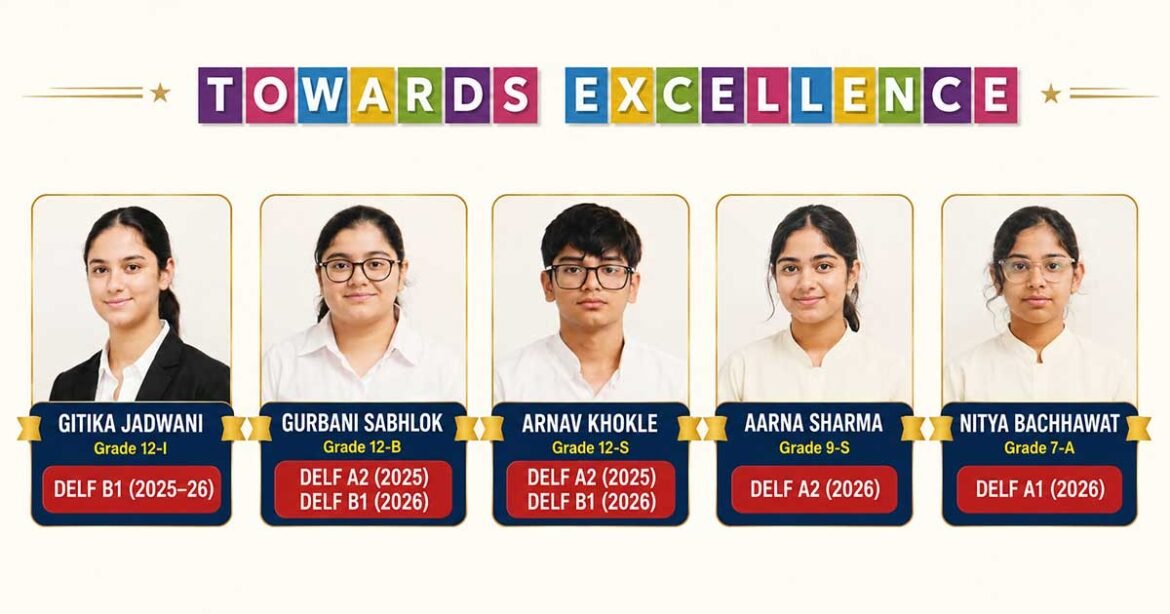
- Gitika Jadwani, Grade 12-I – DELF B1 (2025–26)
- Gurbani Sabhlok, Grade 12-B – DELF B1 (2026) and DELF A2 (2025)
- Arnav Khokle, Grade 12-S – DELF B1 (2026) and DELF A2 (2025)
- Aarna Sharma, Grade 9-S – DELF A2 (2026)
- Nitya Bachhawat, Grade 7-A – DELF A1 (2026)
The students prepared for these international examinations alongside their regular academic responsibilities. Their achievement demonstrates commitment, confidence, linguistic ability, and a strong desire for personal and academic growth.
This accomplishment supports the school’s vision of nurturing globally competent learners who are academically capable, culturally aware, and prepared to participate confidently in an interconnected world.
Several more students are now preparing to appear for their DELF examinations. The school wishes them every success as they get ready to demonstrate their French language proficiency on an international platform.
N.H. Goel World School congratulates all the achievers and appreciates the French faculty for their dedicated mentoring and encouragement.
Toutes nos félicitations à nos étudiants et bonne chance à ceux qui vont passer leurs examens bientôt!
Congratulations to our students, and best wishes to those preparing for their examinations!